Review · WORKSHOPS
Fliteboard EFoil Lesson
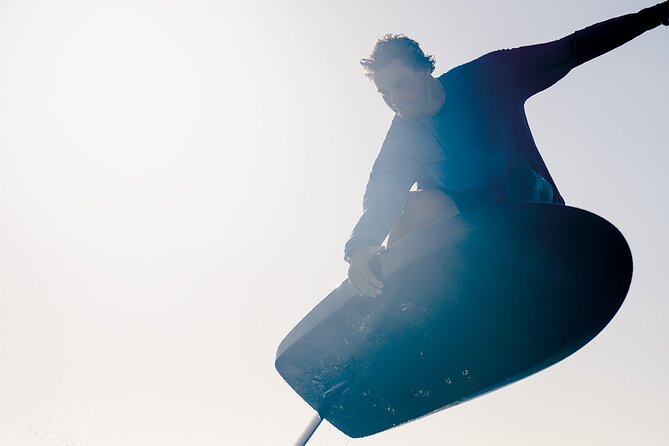
Flying over the water starts on your knees. The Fliteboard efoil lesson in English Harbour gives you a thrilling introduction to electric foiling, with a short land briefing followed by hands-on coaching in a warm, sheltered harbour. I like the private group format, and I like that certified national instructors stay close while you learn. The main drawback is time: 90 minutes goes quickly, especially if you need extra practice before standing.
The $185 price is not cheap, but it includes the board, instruction, safety guidance, and a full hour on the water. Jaycee, also called JC, receives repeated praise for his calm, friendly coaching and for helping complete beginners get upright and start foiling. Still, success is not guaranteed. You may spend much of the lesson kneeling or falling before the technique clicks.
In This Review
- Key points at a glance
- Starting at Dockyard Drive in English Harbour
- The first 15 minutes: understanding an efoil
- The first water stage: lying down on the board
- Moving to your knees and finding the foil
- Standing up and attempting your first flight
- Why the private 90-minute format matters
- What $185 gets you in Antigua
- Who should book this Fliteboard lesson?
- My call: book it if flying is the point
- FAQ
- Where does the Fliteboard efoil lesson start?
- Where does the activity finish?
- How long does the efoil lesson last?
- Is the activity private?
- What will I learn during the lesson?
- Can I cancel for a full refund?
Key points at a glance
- Learn in English Harbour: The warm, sheltered setting gives beginners a calmer place to get used to the board.
- Start with 15 minutes on land: You learn how the efoil works and review the rules before entering the water.
- Progress in clear stages: Begin lying down, move to your knees, then attempt standing when you feel ready.
- Close instructor support: Certified instructors remain nearby, with JC singled out for patient and effective coaching.
- Private activity: Only your group participates, which means the lesson can focus on your pace.
- Flexible cancellation: Cancel at least 24 hours before the start time for a full refund.
Starting at Dockyard Drive in English Harbour
Your lesson begins at 268J+XC8, Dockyard Drive, English Harbour, Antigua and Barbuda. The activity also finishes at this same meeting point, so you do not need to arrange a separate return transfer.
That simple start and finish matters. Water activities can involve boards, towels, changing clothes, and other gear, so avoiding a second meeting point keeps the practical side easy. The location is near public transportation, and confirmation is sent when you book. Since the lesson is private, you also avoid being folded into a large mixed group with different skill levels.
The booking pattern suggests that many people reserve this experience around 13 days ahead. I would not leave it until the last minute if efoiling is high on your Antigua list, particularly if your dates are fixed. The lesson lasts about 1 hour and 30 minutes, with roughly 15 minutes on land and 60 minutes in the water. The remaining time allows for getting ready, moving between the briefing and practical session, and wrapping up.
The exact changing arrangements are not specified, so it is sensible to ask the operator what to bring and where personal items can be kept. The listed activity allows service animals, and most people can participate, but the information does not set out specific fitness, swimming, weight, or age requirements. If any of those points affect you, check before paying.
What else visitors pair with this near Antigua:
- Adventure Antigua – The Xtreme Circumnavigation
★ 5.0 · 959 reviews - Turtle Beach Power Snorkeling Adventure
★ 5.0 · 521 reviews - Scenic Full Day Tour of Antigua
★ 5.0 · 472 reviews
The first 15 minutes: understanding an efoil
The lesson starts with a theory session on land. This is brief, but it is not filler. Before you try to control a powered board, you need to understand how a Fliteboard efoil works and how to use it correctly.
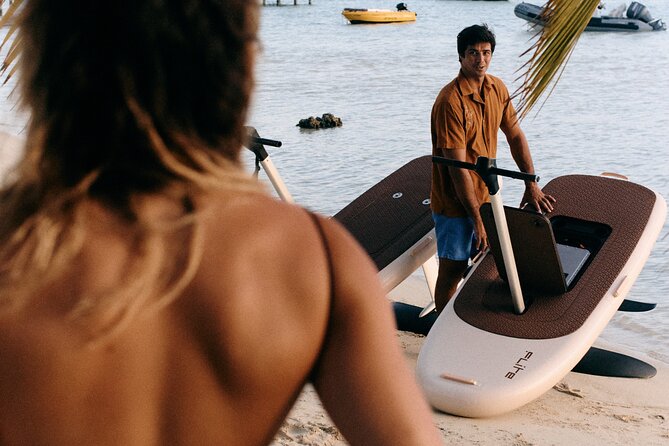
An efoil combines a board, an electric motor, and an underwater foil. As the board gains speed, the foil lifts the board above the surface, creating the sensation of flying over the water. The equipment can look simple from shore, but your body position and control inputs matter. The land briefing gives you the basic rules before you have to think about them while moving.
Safety is part of the lesson from the start. All courses are run under safety regulations and with supervision. That is especially valuable for a first attempt, since you are learning both a new sport and a new piece of equipment at the same time.
I appreciate this short introduction because it sets realistic expectations. You are not simply handed a board and sent off. You first learn what the equipment does, how to use it properly, and how to approach the practical work safely.
The session is also a chance to ask questions before getting wet. If you are nervous about balance or have never tried a foil board, use these 15 minutes well. Listen closely to the instructions on posture, movement, and control. A little attention on land can save you several awkward attempts in the water.
The first water stage: lying down on the board
Once you enter the water, you do not immediately try to stand. The lesson builds in small steps, beginning with lying down on the board.
This first stage is about becoming familiar with the equipment. You learn how the board responds, how the motor feels, and how to keep yourself positioned while moving. It may not look dramatic, but it is the foundation for everything that follows.
For a beginner, lying down removes some of the balance challenge. You can focus on direction and control without also trying to keep both feet planted. The instructors can watch your movement closely and help you correct mistakes before they become habits.
This is also where your patience matters. The experience is exciting because the goal is to fly above the water, but rushing ahead can make the board harder to control. I would treat the first stage as useful practice rather than waiting impatiently for the impressive part.
The calm setting of English Harbour helps here. The area is described as warm and sheltered, which can make the first attempts feel less intimidating than learning in a rougher open-water setting. Conditions still matter, of course, and the supplied information does not promise a particular sea state on your chosen day.
Moving to your knees and finding the foil
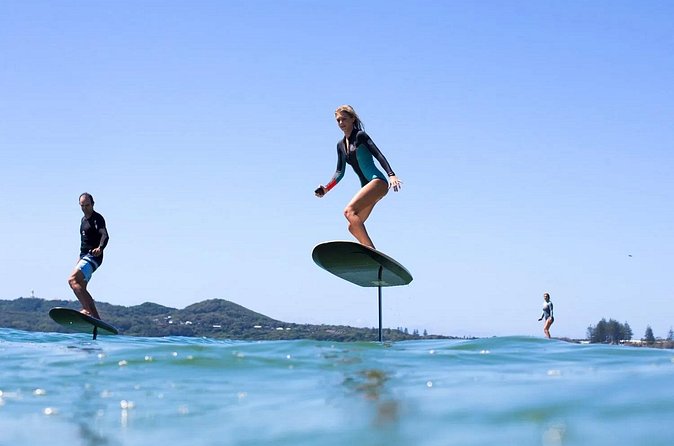
After lying down, you progress to your knees. This is the point where balance becomes more demanding and the board begins to feel less like a regular watercraft.
Kneeling lets you test your body position before committing to standing. You can feel how small changes affect the board, while still keeping your center of gravity low. The goal is not speed for its own sake. It is control.
The instructions make clear that you move on only when you feel confident enough. That is an important part of the lesson. Some people may progress quickly, while others need more time to become comfortable. Since this is a private activity, your group is not held to a public class timetable with strangers waiting for you to catch up.
The published experiences include several strong examples of rapid progress. Some complete beginners were standing within about 30 minutes, while others reached foiling within half an hour or by the end of the hour. Those results show what can happen with good coaching, but they should not be treated as a promise.
Your own progress will depend on balance, confidence, and how quickly the controls make sense to you. It is perfectly reasonable if your personal victory is a controlled kneeling run rather than a long flight. You still get a real introduction to the sport and a better sense of whether you want to practice again.
Something completely different on Antigua:
- Snorkel – Lobster Lunch Cruise to Bird Island and Paradise Reef
★ 5.0 · 438 reviews - Adventure Antigua – Eli’s Original Eco Tour
★ 4.5 · 238 reviews - Antigua Round Island Tour
★ 4.5 · 226 reviews - Antigua VIP Tours – Private Platinum Tour
★ 5.0 · 224 reviews
Standing up and attempting your first flight
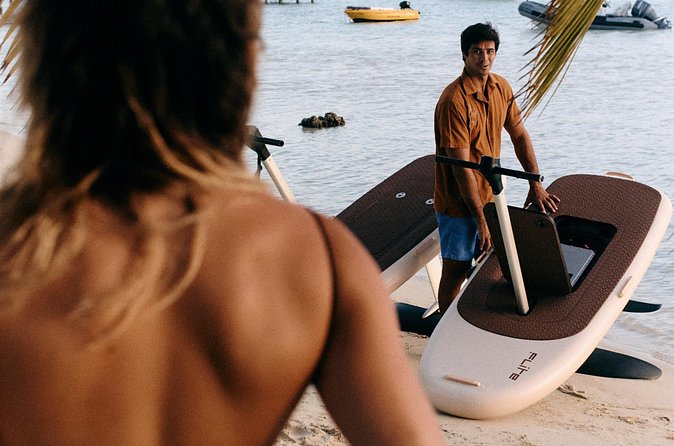
Standing is the turning point. When the instructor decides you are ready, you begin making attempts to rise from your knees.
This part can be thrilling and frustrating in equal measure. You may find that the board feels stable for a moment, then suddenly slips away. The best approach is to listen to the instructor and make small changes rather than trying to force the board into a fast rise.
Several participants reached standing and then began foiling within the 60-minute water session. Some also managed turns by the end. JC is repeatedly praised for getting beginners upright quickly while keeping the atmosphere relaxed. Jaycee and JC refer to the same instructor, so you may see either name used when arranging or discussing the lesson.
His coaching style appears to be one of the biggest strengths of the experience. The feedback describes him as laid-back, helpful, patient, and good at explaining the process. Those qualities matter more here than a flashy demonstration. A beginner needs clear corrections and calm encouragement after a fall.
The team also receives praise for good communication, with Martha mentioned for keeping people informed. That suggests the experience is not only about the time on the board. Clear instructions before and during the session can make the whole outing feel more organized.
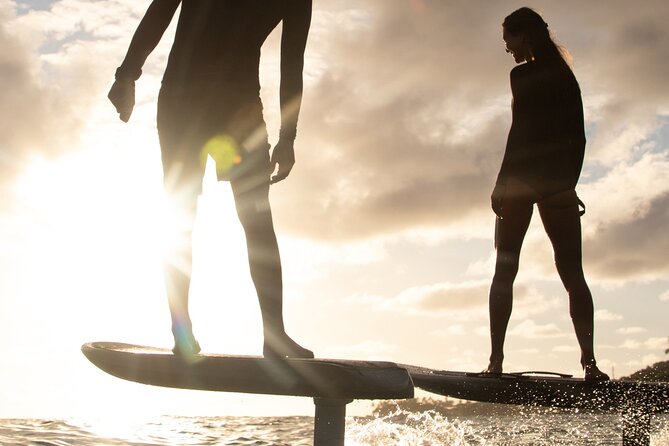
If you manage to lift the board above the water, the sensation is unlike ordinary stand-up paddleboarding or surfing. You are not simply skimming along the surface. You are learning to control a powered foil that raises the board, even if only for a short run at first.
Why the private 90-minute format matters
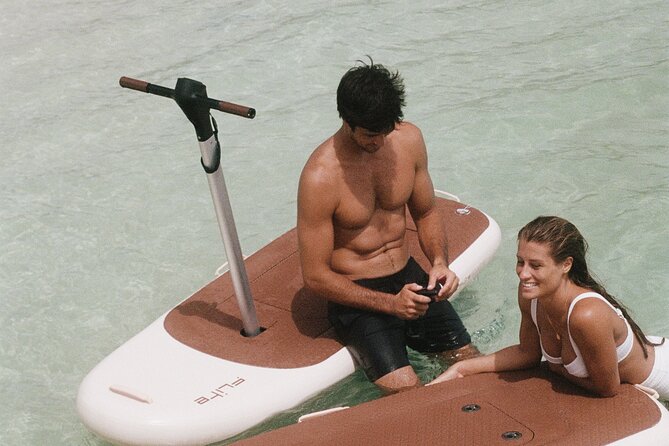
The private setup is one of the clearest reasons to consider this lesson. Only your group participates, so the instructor can focus on your progress rather than splitting attention across a large class.
That is useful for couples, families, and small groups with similar goals. The experiences described include two teenagers with their dads, as well as a husband-and-wife pair. Groups with mixed confidence levels can still work well because each person can progress through the steps at an individual pace.
The 90-minute duration is long enough to give the sport a fair try, but it is not an all-day activity. You spend about 15 minutes learning on land and about 60 minutes actively practicing in the water. For a holiday schedule, that leaves room for another activity in English Harbour or elsewhere in Antigua.
I would keep the timing in mind if you are hoping for a long independent ride. This is a lesson, not a rental session. The instructor needs to explain the equipment, supervise your first attempts, and help you develop the basic technique. You are paying for teaching and safety as much as for water time.
Because the activity ends where it starts, it is also easy to fit into a day based around the harbour. Still, allow more time than the stated 90 minutes if you have a fixed dinner reservation or another booking immediately afterward. The listed duration is approximate.
What $185 gets you in Antigua
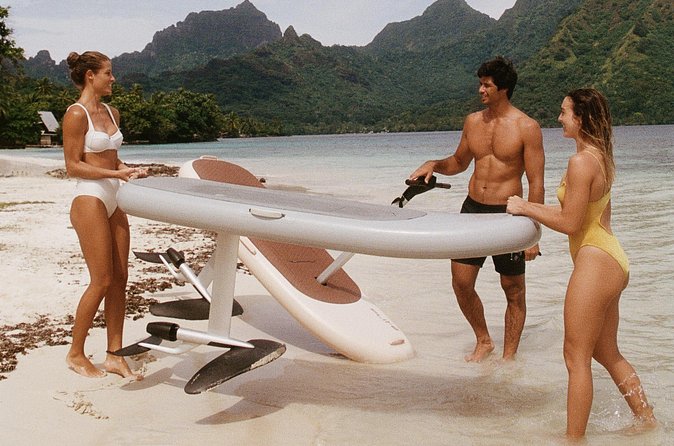
At $185 per person, this is a premium water activity. The price makes more sense if you value personal instruction and want to try a sport that would be difficult to learn alone.
You are paying for a private lesson, supervised use of the efoil equipment, the theory briefing, and practical coaching. The board is a specialized piece of gear, and learning on it without instruction would be a poor use of holiday time and could be unsafe.
The value is strongest for someone who has specifically wanted to try efoiling. If you are only looking for a cheap way to get on the water, Antigua offers less expensive options. If you want the distinctive feeling of lifting above the surface and you appreciate one-to-one attention, the price is easier to justify.
The feedback gives the lesson a perfect five-star average from 12 ratings, with 100 percent recommending it. That is a small sample, so I would not treat it as proof that every person will foil successfully. It does show a consistent pattern: people value the friendly service, quality equipment, strong safety focus, and the chance to make quick progress.
The most useful way to judge the cost is to ask what result would satisfy you. If you need to be standing and flying by the end, the price carries some risk. If you would be happy learning the controls, kneeling steadily, and making a few standing attempts, the lesson can still be worthwhile.
Who should book this Fliteboard lesson?
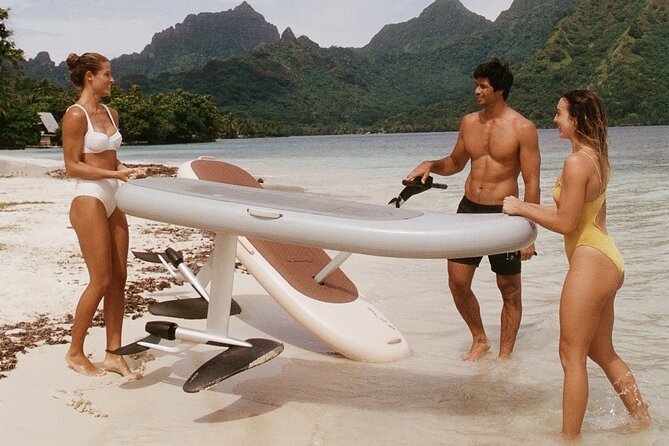
I would recommend this for adults, teenagers, couples, and small groups who want a guided challenge rather than a passive boat outing. It suits people who like learning a new skill and do not mind a few falls along the way.
It is especially appealing if you have already watched efoiling and wanted to try it yourself. The sheltered harbour setting, close supervision, and gradual sequence make it more approachable than simply renting unfamiliar equipment.
You should also be comfortable with the possibility that your progress may be slower than someone else’s. The lesson is designed for beginners, but beginner-friendly does not mean effortless. Balance sports usually involve trial and error, and the instructors can help you, but they cannot remove the learning curve.
The information says most people can participate, but it does not provide detailed medical or physical requirements. Ask before booking if you have concerns about mobility, balance, or any condition that could affect your ability to kneel, stand, or fall safely.
Service animals are allowed. The activity is near public transportation, and the meeting point remains the start and end point. Free cancellation is available if you cancel at least 24 hours before the local start time. Inside that window, the payment is not refunded, and changes are not accepted.
My call: book it if flying is the point
I would book the Fliteboard efoil lesson if you want to try a modern, unusual water sport and are willing to pay for focused instruction. The strongest reasons are the private format, the sheltered English Harbour setting, and the instructors’ patient help with the difficult early stages.
I would skip it if you want a relaxed hour on the water with little physical effort, or if $185 feels too high for an activity with no guaranteed flight time. Efoiling asks for balance, attention, and persistence.
For the best chance of enjoying it, arrive ready to listen, accept that the first attempts may be awkward, and measure success by progress rather than by distance. If you stand up and foil, excellent. If you only reach your knees and learn how the board responds, you still leave with a clear sense of what the sport demands.
FAQ
Where does the Fliteboard efoil lesson start?
It starts at 268J+XC8, Dockyard Drive, English Harbour, Antigua and Barbuda.
Where does the activity finish?
The lesson ends back at the same meeting point.
How long does the efoil lesson last?
The experience lasts approximately 1 hour and 30 minutes. This includes a 15-minute theory session on land and about 60 minutes of practical instruction in the water.
Is the activity private?
Yes. Only your group participates in the activity.
What will I learn during the lesson?
You learn how an efoil works, the rules for using it correctly, and how to progress from lying on the board to kneeling and then attempting to stand.
Can I cancel for a full refund?
Yes. You can cancel at least 24 hours before the local start time for a full refund. Cancellations or changes made within 24 hours are not accepted for a refund.
Recently reviewed around Antigua
- Tuk Tuk – Historical Harbour, Beach & Beers!★ 4.5 · 7 reviews
- Stunning Antigua And Barbuda Island Tour★ 4.0 · 6 reviews
- Sunset party at Shirley Heights – PRIVATE round trip★ 5.0 · 4 reviews
- Guided Orange Valley Bike and Hike★ 4.0 · 6 reviews
- Haffu come back Taxi Service★ 5.0 · 5 reviews
- Long Bay, Devil’s Bridge and Pigeon Point Beach: Life’s A Beach Crawl!★ 5.0 · 2 reviews
- Biggvee Bus Adventure★ 4.5 · 6 reviews
- Hike Antigua Tour – Conquer the Hill★ 5.0 · 4 reviews